




 Short answer
Four questions
Make or Zapier: four questions, four answers
Our advice for each angle, with sources. Each card links to the section with the full numbers.
Which is cheaper?
- A five-step workflow costs Make $16 and Zapier $133.50 a month at 1,000 runs, $81 and $433.50 at 10,000, and $531 and $1,899 at 100,000, on monthly billing.[1, 2, 3, 4, 5, 6]
- Make has the lower monthly price at all three volumes.[1, 2, 3, 4, 5, 6]
Which performs better?
- Longest run: Make, 45 minutes (10 minutes on Free). Zapier, not published for a whole Zap. Code steps up to 10 minutes.[7, 8]
- Runs at once: Make, parallel capacity in processing units, per-plan numbers not published. Zapier, not published. On G2: Make 4.6 from 524 reviews, Zapier 4.5 from 2,173 reviews.[5, 14, 15, 16]
Which is more capable?
- Zapier has the larger catalog, with 9,000+ apps against 3,500+, and code steps that can run up to 10 minutes against 30 seconds on Make Code below Enterprise.[8, 9, 10, 11]
- Make has more error handlers, run replay on every plan, an open canvas and EU data zones. Zapier stores data in the US only.[7, 10, 12, 13, 17]
Which to choose?
- Choose Make if price or EU data matters: a five-step workflow at 10,000 runs a month costs $81 on Make against $433.50 on Zapier, and Make offers EU data zones.[1, 5, 12, 13]
- Choose Zapier if you need its catalog of 9,000+ apps against 3,500+ on Make, or a list editor that non-technical staff can follow.[5, 9, 10]
Cost
What the same workflow costs
One trigger and four actions, run 1,000, 10,000 and 100,000 times a month, priced on the cheapest plan that fits.
1,000 runs/mo
Monthly billing, cheapest plan that fits.
10,000 runs/mo
Monthly billing, cheapest plan that fits.
100,000 runs/mo
Monthly billing, cheapest plan that fits.
| Volume | Make | Zapier |
|---|---|---|
| 1,000 runs/mo | $16 monthly[1, 2]$11/mo billed yearlyCore, 10,000 credits | $133.50 monthly[5, 6]$89/mo billed yearlyProfessional, 5K tasks |
| 10,000 runs/mo | $81 monthly[1, 2, 3]$65/mo billed yearlyCore, 80,000 credits | $433.50 monthly[5, 6]$289/mo billed yearlyProfessional, 50K tasks |
| 100,000 runs/mo | $531 monthly[1, 2, 4]$425/mo billed yearlyPro, 500,000 credits | $1,899 monthly[5, 6]$1,269/mo billed yearlyProfessional, 400K tasks |
How each number was worked out
The workflow has one trigger and four actions, processes one item per run, and uses no AI or code steps. Each price is the cheapest plan whose allowance covers the volume, from the list price on the vendor pricing page.
- Make, 1,000 runs/mo: 1,000 runs × 5 modules = 5,000 credits, with an instant (webhook) trigger. A polling trigger adds 1 credit per check.[1, 2]
- Make, 10,000 runs/mo: 10,000 runs × 5 modules = 50,000 credits. Core 40,000 and 10,000 extra credits at the 25% premium come to about $60 monthly.[1, 2, 3]
- Make, 100,000 runs/mo: 100,000 runs × 5 modules = 500,000 credits. Core stops at 300,000 credits a month.[1, 2, 4]
- Zapier, 1,000 runs/mo: 1,000 runs × 4 actions = 4,000 tasks. The trigger uses no task. The Free plan allows two-step Zaps only.[5, 6]
- Zapier, 10,000 runs/mo: 10,000 runs × 4 actions = 40,000 tasks.[5, 6]
- Zapier, 100,000 runs/mo: 100,000 runs × 4 actions = 400,000 tasks.[5, 6]
Discount for paying yearly
- WEXTL16.67% to 56.14%up to 56.14% off with yearly billing
- Zapier31.83% to 33.54%up to 33.54% off with yearly billing
- Make19.57% to 31.25%up to 31.25% off with yearly billing
- n8n16.67%16.67% off with yearly billing
- Activepieces16.67%16.67% off with yearly billing
Key facts
Make vs Zapier: key facts
Billing, plans, apps and hosting side by side.
| Feature | Make | Zapier |
|---|---|---|
| Website | make.com[10] | zapier.com[9] |
| Pricing page | make.com/en/pricing[1] | zapier.com/pricing[5] |
| Billing unit | Credits (operations until August 2025)[1, 2] | Tasks[5] |
| What uses a unit | 1 credit per module run, triggers included, even when a polling trigger finds nothing. Routers and filters use none[2] | 1 task per action. Triggers, filters, paths and formatter steps use no tasks[5, 6] |
| Entry paid plan | $11/mo billed yearly, $16 monthly (10,000 credits)[1] | $19.99/mo billed yearly, $29.99 monthly (750 tasks)[5] |
| Yearly billing discount | 19.57% to 31.25%, highest on Core at 10,000 credits[1] | 31.83% to 33.54% (the page says Save 33%)[5] |
| Plans | Free, Core, Pro, Teams, Enterprise[1] | Free, Professional, Team, Enterprise[5] |
| No-cost option | Free plan: 1,000 credits/mo, 2 active scenarios, 15 min interval[1] | Free plan: 100 tasks/mo, two-step Zaps only[5] |
| Integrations | 3,500+ apps[1, 10] | 9,000+ apps (the directory counter shows 10,599+)[9, 18] |
| Hosting | Cloud only. Enterprise runs in a separate AWS environment[19] | Cloud only[13] |
| Data regions | EU and US data zones[12] | United States only. No EU data residency[13] |
Features
Features compared
Builder, code, error handling, AI agents, MCP and team features.
| Feature | Make | Zapier |
|---|---|---|
| Builder | Open visual canvas with modules placed anywhere[10] | Linear list of steps. Next Gen Zaps (early access) add a canvas[5, 20] |
| Branching | Router (all matching routes) and If-else with Merge[2] | Paths, up to 100 steps per Zap[21] |
| Code steps | JavaScript and Python on paid plans (Make Code)[11] | JavaScript (Node.js 22) and Python 3.13[8] |
| Error handling | Retry, Resume, Rollback, Break, Ignore handlers. Run replay on all plans[7, 17] | Autoreplay and custom error paths on Pro and up, manual replay[22] |
| Versioning | Saved versions kept for 60 days[23] | Zap version history and compare on paid plans[5] |
| AI agents | Make AI Agents since May 2025 (paid plans). New app with sub-agents and MCP tools since Feb 2026[24, 25] | Zapier Agents, billed in activities apart from tasks[5, 26] |
| MCP | Make MCP server on all plans, MCP client[27] | Zapier MCP on all plans, 2 tasks per tool call from 5 Jan 2027[6, 28] |
| Users | No seat limit published. Teams and roles on Teams plan[1] | 1 on Free and Pro, 25 on Team[5] |
| Active workflows | 2 on Free, unlimited on Core and up[1] | Unlimited Zaps on every plan[5] |
| Templates | Public template gallery, shared templates on Teams[1] | Large public template gallery[18] |
| Developer tools | Custom apps, REST API, TypeScript SDK, Make CLI[1] | Platform CLI and UI for connectors, Zapier SDK (beta)[5] |
Limits and ratings
Run limits and ratings
Neither vendor publishes speed or uptime figures we could check, so this compares the limits each one publishes and what users say on review sites.
| Feature | Make | Zapier |
|---|---|---|
| Max run time | 45 minutes (10 minutes on Free)[7] | Not published for a whole Zap. Code steps up to 10 minutes[8] |
| Shortest schedule | 15 min on Free, down to 1 minute on paid plans[1, 29] | 15 min on Free, 2 min on Pro, 1 min on Team[5] |
| Concurrent runs | Parallel capacity in processing units, per-plan numbers not published[14] | Not published[5] |
| Error recovery | Retry, Resume, Rollback, Break, Ignore handlers. Run replay on all plans[7, 17] | Autoreplay and custom error paths on Pro and up, manual replay[22] |
Longest run a single workflow can take
- WEXTL24 hours
- Make45 min
- n8n Cloud40 min
- Activepieces10 min
| Review site | Make | Zapier |
|---|---|---|
| G2 | 4.6/5 (524 reviews)[15] | 4.5/5 (2,173 reviews)[16] |
| Capterra | 4.8/5 (406 reviews)[30] | 4.7/5 (3,083 reviews)[32] |
| Trustpilot | 2.3/5 (177 reviews)[31] | 1.3/5 (335 reviews)[33] |
In depth
Make vs Zapier in depth
Tasks against credits
Zapier bills in tasks. Each action that completes is one task. Triggers, Filter, Formatter, Paths, Delay and Looping use none, and failed actions do not count. A five-step Zap with one trigger and four actions uses 4 tasks per run.[5, 6]
Make bills in credits. Every module run uses 1 credit, the trigger included, so the same five-step workflow uses 5 credits per run. Routers, filters and error handler modules use none. A polling trigger uses 1 credit for each check, even when it finds nothing. Zapier says it never charges a task to check for new data.[2, 5]
Make counts one more unit per run, but a Make credit costs far less than a Zapier task. Core sells 10,000 credits for $16 a month. Zapier Professional sells 5,000 tasks for $133.50 a month.[1, 5]
Cost at three volumes
Monthly billing puts 1,000 five-step runs at $16 on Make Core and $133.50 on Zapier Professional with 5,000 tasks. At 10,000 runs, Make Core with 80,000 credits costs $81 against $433.50 for Zapier with 50,000 tasks. At 100,000 runs, Make Pro with 500,000 credits costs $531 against $1,899 for Zapier with 400,000 tasks. Yearly billing gives $11, $65 and $425 on Make, and $89, $289 and $1,269 on Zapier.[1, 2, 5, 6]
The gap grows with long workflows. Take 20 steps, one trigger and 19 actions. Zapier counts 19 tasks per run and Make counts 20 credits. At 10,000 runs that is 190,000 tasks on the Zapier 200K tier at $1,149 a month, against 200,000 credits on the Make Core 300,000 tier at $236. At 100,000 runs, Zapier needs the 2M tier at $5,099 and Make needs Pro with 2M credits at $1,783.[1, 2, 5, 6]
Two Make rules can close part of the gap. A polling trigger set to every minute makes up to 43,200 checks a month, and each one uses a credit, which is more than four times the 10,000 credits of Core. Extra credits cost 25% more than plan credits, and Core stops at 300,000 credits a month. Use an instant trigger on Make where the app offers one.[2, 3, 4]
Builder, code and errors
A Zap is a list of steps that reads top to bottom, with Paths for branches and a limit of 100 steps. Make places modules on an open canvas. A Router runs every route whose filter matches, and If-else with Merge runs only the first true route. Zapier is quicker to learn. Make shows a complex workflow more clearly.[2, 5, 10, 21]
Both accept JavaScript and Python in code steps. Zapier includes 30 seconds of runtime per code step on Pro and Team, and extended runtimes reach 10 minutes at 1 extra task per 30 seconds. Make Code needs a paid plan, stops at 30 seconds below Enterprise and uses 2 credits per second.[2, 6, 8, 11]
Make has more ways to recover from an error: Retry, Resume, Commit, Rollback, Break and Ignore handlers, incomplete executions that retry, and run replay on every plan. Zapier offers autoreplay and custom error paths from Pro, and manual replay. Publishing a custom error path turns autoreplay off for that Zap.[7, 17, 22]
AI agents and MCP
Zapier Agents are billed in activities, apart from tasks: 400 a month on Free and 1,500 on Pro. AI steps inside a Zap cost 1, 3 or 5 tasks by model tier. Make AI Agents need a paid plan, and the new app from February 2026 adds sub-agents and MCP tools. Make bills AI by tokens, or 1 credit per call with your own key.[2, 5, 6, 25, 26]
Both run an MCP server. Zapier MCP is on all plans, and each tool call will cost 2 tasks from 5 January 2027. Make MCP lets any plan run scenarios, and paid plans can also manage them.[6, 27, 28]
Data location and trust
Zapier stores data on AWS servers in the United States and does not offer EU data residency. It also says regulated health data, including PHI under HIPAA, is not supported. Make lets each organization pick an EU or US data zone, though some AI features route to the US or UK from EU zones. Both are cloud only, and both publish SOC 2 Type II and SOC 3 audits.[12, 13, 19, 34]
Reviews on G2 are close: Zapier has 4.5 from 2,173 reviews and Make 4.6 from 524. Trustpilot tells another story, with 1.3 for Zapier from 335 reviews and 2.3 for Make from 177. The G2 and Trustpilot scores point in different directions for both tools, so read the reviews on both sites before you decide.[15, 16, 31, 33]
What we see at StartAutomate
Make runs 15% of the client automations we build and maintain. Zapier runs 18.75%. Both Make and Zapier declined in our client base from 2024 to 2026, while n8n and WEXTL grew.[35]
We pick Make when a client needs fast iteration at low scale, and our smallest clients, with 1 to 5 people, are mostly on Make. We pick Zapier when it has a connector the other platforms lack, the automation is a couple of simple steps, and the cost is acceptable to the client. US clients use Zapier far more than clients in our other markets.[35]
Every automation runs in the account of the client, not in a StartAutomate account. The client owns the workflows, the credentials and the bill.[35]
Pros and cons
Strengths and weaknesses
Each point links to its source. WEXTL is listed with the same detail as the others.
Make
Strengths of Make
Weaknesses of Make
- Every module uses credits, the trigger included. A polling trigger uses 1 credit per check even when it finds nothing.[2]
- A run stops after 45 minutes (10 minutes on Free).[7]
- Extra credits cost 25% more than plan credits, and Core stops at 300,000 credits a month.[3, 4]
- No self-hosting.[19]
- Code steps need a paid plan and use 2 credits per second of run time.[2, 11]
- We find that Make steers clients to Enterprise above about 1 million operations a month, with quotes from about $50,000 a year. The Pro list price for 1 million credits is $969 a month, or $11,628 a year.[1, 35]
Zapier
Strengths of Zapier
- The largest app directory of the five: 9,000+ apps.[9]
- Triggers, filters, paths, formatter and looping steps use no tasks.[6]
- The simplest builder for a non-technical team: one step after another.[5]
- Code steps in both JavaScript and Python.[8]
- The most reviews of the five on G2 (2,173) and Capterra (3,000+).[16, 32]
Weaknesses of Zapier
- The most expensive of the five at every volume we priced: $1,269/mo billed yearly for 100,000 five-step runs.[5]
- Data is stored in the United States only. There is no EU data residency.[13]
- No self-hosting.[13]
- AI steps cost 1, 3 or 5 tasks by model tier, and MCP tool calls will cost 2 tasks each from 5 January 2027.[6]
- A Trustpilot score of 1.3 from 335 reviews, against 4.5 on G2.[16, 33]
From our client work
What our client work shows
How StartAutomate splits client automations, when we pick Make or Zapier, and what we see building and maintaining them.
First-hand data from the StartAutomate team, November 2026. It covers the automations we build and maintain for clients, not the market as a whole.[35]
Where our client automations run
- WEXTL30%
- n8n25%
- Zapier18.75%
- Make15%
- Activepieces6.25%
- Claude workflows5%
How the split changed, 2024 to 2026
- Make45% → 15%−30% percentage points, fell
- Zapier30% → 18.75%−11.25% percentage points, fell
- Activepieces10% → 6.25%−3.75% percentage points, fell
- n8n15% → 25%+10% percentage points, grew
- WEXTL0% → 30%+30% percentage points, grew
- Claude workflows0% → 5%+5% percentage points, grew
View as table
| Platform | 2024 | 2025 | 2026 |
|---|---|---|---|
| Make | 45% | 38% | 15% |
| Zapier | 30% | 27.75% | 18.75% |
| Activepieces | 10% | 9.25% | 6.25% |
| n8n | 15% | 22% | 25% |
| WEXTL | 0% | 1% | 30% |
| Claude workflows | 0% | 2% | 5% |
Credits per order on the same live workflow
- WEXTL9 to 11
- Make16 or more
When we pick each one
- Make
- We pick it when the client needs fast iteration at low scale. Our smallest clients, with 1 to 5 people, are mostly on Make.
- Zapier
- We pick it when Zapier has a connector the other platforms lack, the automation is a couple of simple steps and the cost is acceptable to the client.
What it costs in practice
- Credits per order on that workflow: Make uses at least 16, WEXTL uses 9 to 11, depending on which conditions pass. At 5,000 orders a month that is at least 80,000 Make credits, which needs Core 80k or higher, from $81 monthly ($65 billed yearly), against at most 55,000 WEXTL credits, which fits Grow at $40 monthly ($33.33 billed yearly). WEXTL wins on both ends: fewer credits per run and a lower price per credit.
- Make steers clients toward Enterprise above about 1 million operations a month, and the quotes we have seen start from about $50,000 a year. The Pro list price for 1 million credits is $969 a month, or $11,628 a year.
- Our Make clients have hit all three Make limits in real work: the 45-minute run cap, the 300,000-credit ceiling on Core, and the 25% premium on extra credits.
- Clients outgrow Zapier when their workflows get complex, not when they get many. We have clients running dozens of small Zaps with no issues. Cost becomes the problem when another service sends a flood of webhooks: one client adds more than 1,000 contacts a day from ActiveCampaign into review requests, and every one of them is a run.
- Empty polls cost the same on Make and WEXTL: each check uses a credit, even when it finds nothing. The WEXTL saving on that workflow comes from fewer steps per run and a lower price per credit, not from polling.
Building and handing over
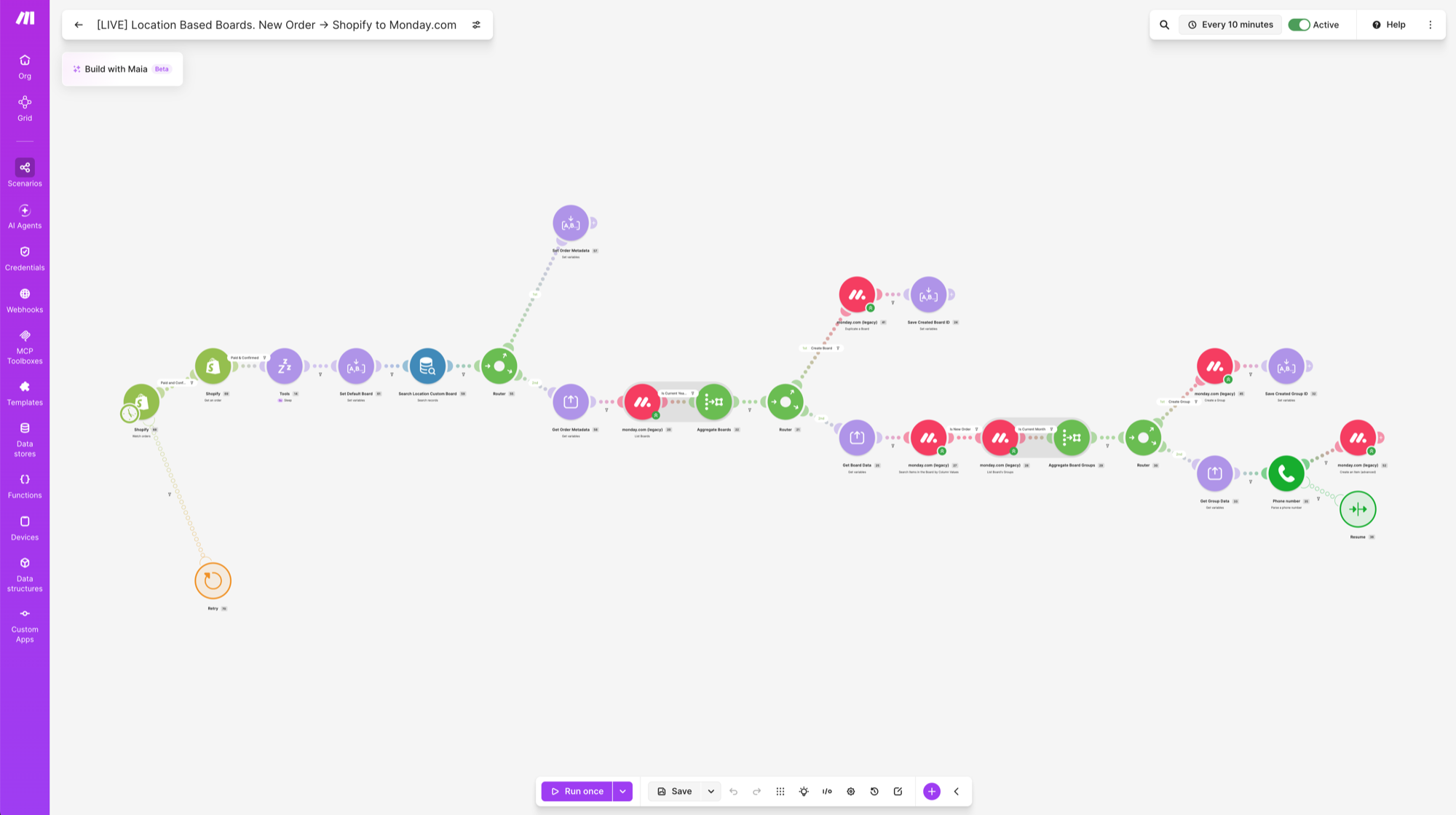
- The Shopify to Monday.com workflow we run on both Make and WEXTL took us about the same time to build and stabilize on Make as on WEXTL. On n8n it would take more effort. On Zapier we would not recommend it to the client at all.
- The same logic adds more steps on Make (routers, set and get variable modules, aggregators). We find the WEXTL version easier to read and hand over.
- We only build on Activepieces for clients who already use it. Clients outgrow it on deterministic workflows at a point close to Zapier: it comes with complexity.
What breaks and how it gets fixed
- API rate limits and timeouts are rarely a problem for us on n8n, Make or WEXTL, because each has retry handling for them.
- Make and WEXTL keep their connector code closed, so only the platform team can update a connector. Make has the older catalog, and in our experience some of its connectors lag behind the API of the app, so a fix can take time. The HTTP step is the workaround. We have also found that some apps on WEXTL come with more modules than the same app on Make.
- A client came to us when the YOURLS app on Make stopped working after an update: its endpoint had gained a stray slash at the end. The client did not want to wait for a fix and wanted a reusable app rather than an HTTP step, so we built a custom Make app for it.
Maintenance load we see
- Make starts to hit limits once workflows scale.
- Zapier does not suit heavy workflows for us, but the 2 or 3 step Zaps we run on it rarely cause problems. We switch them on and leave them.
Our notes on credentials, connector upkeep, volumes, clients and moving between platforms apply to all five platforms. Read them on the platform overview →
Screenshots
Inside the builders
Client workflows in each editor, then the vendor websites as we saw them.
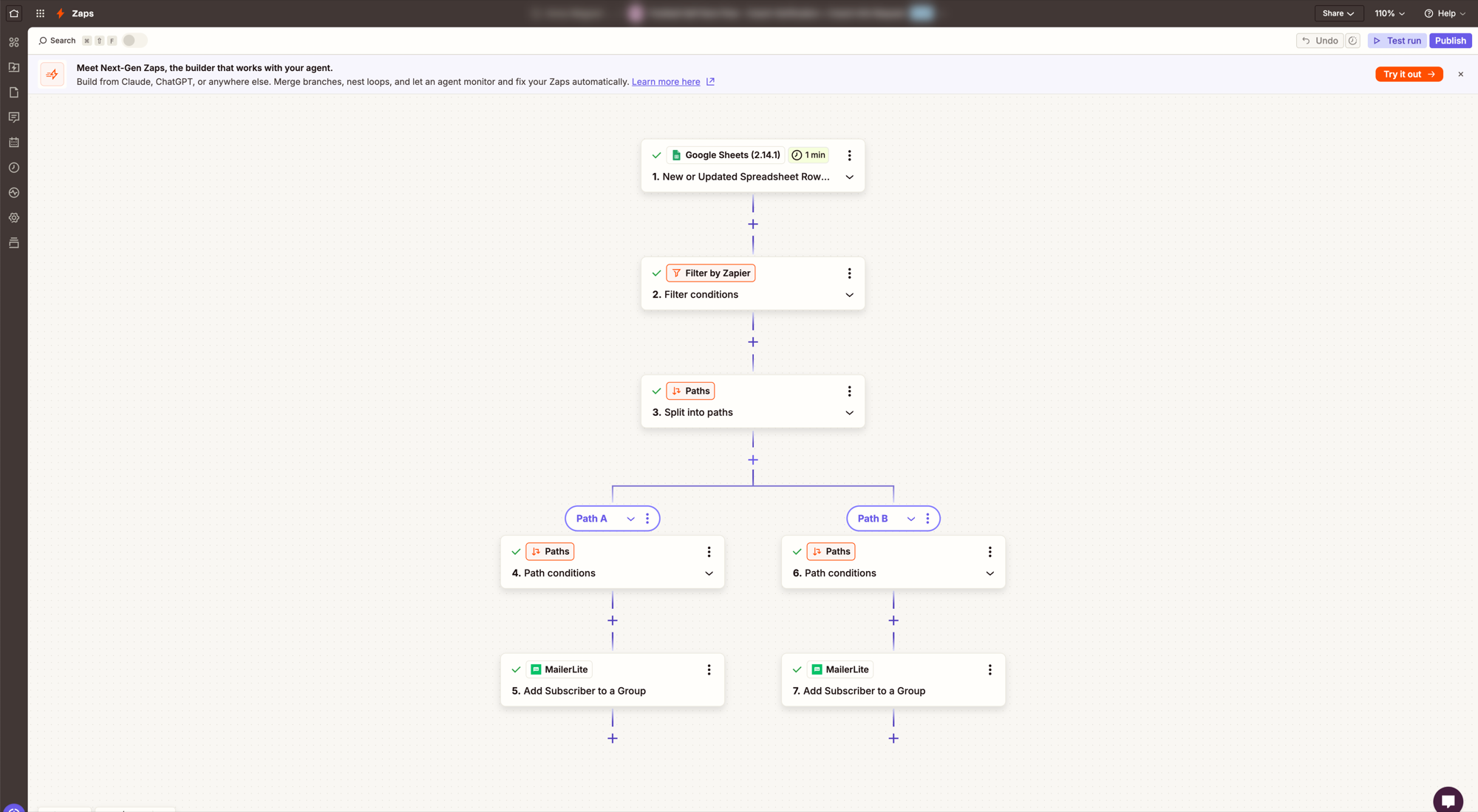
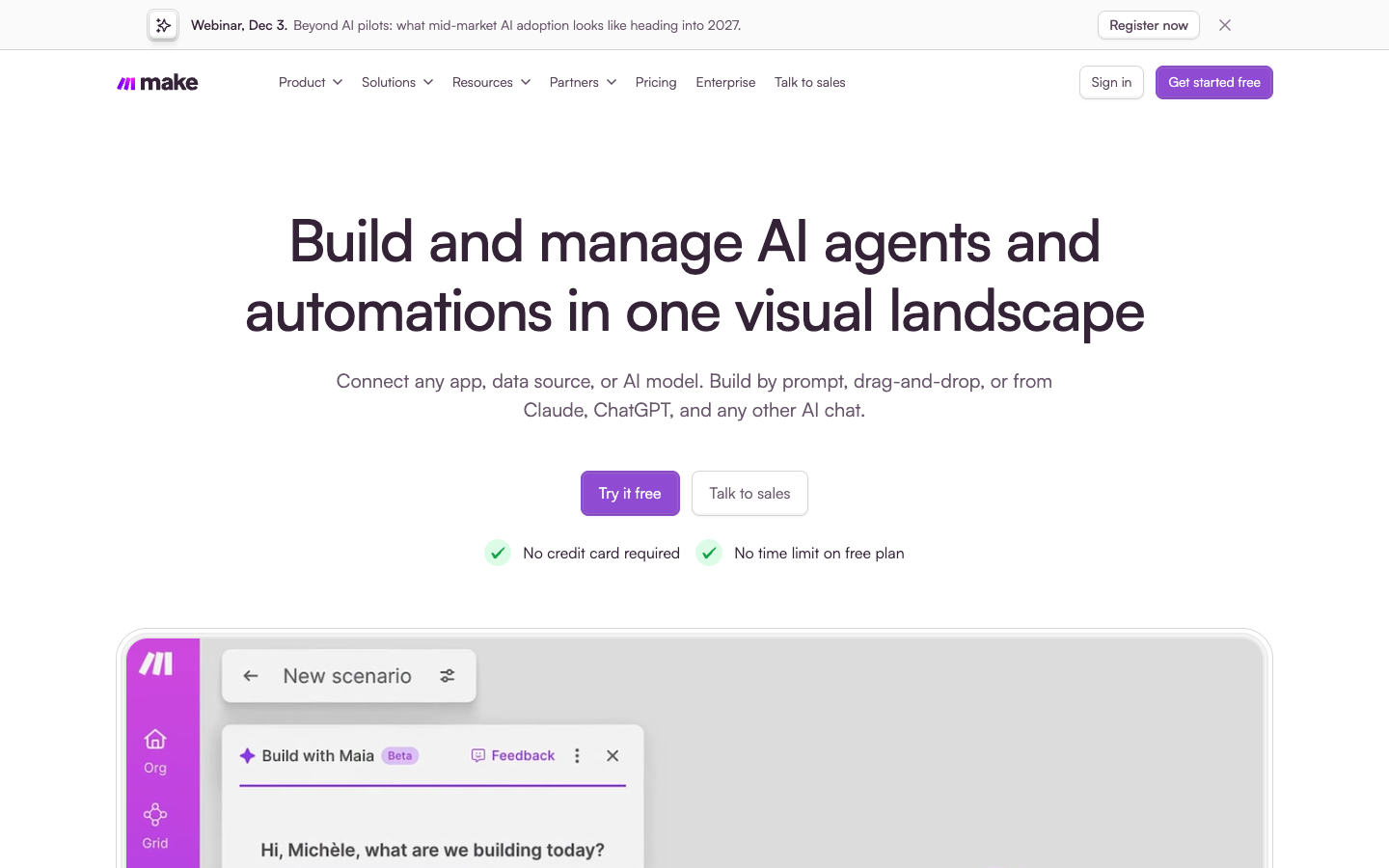
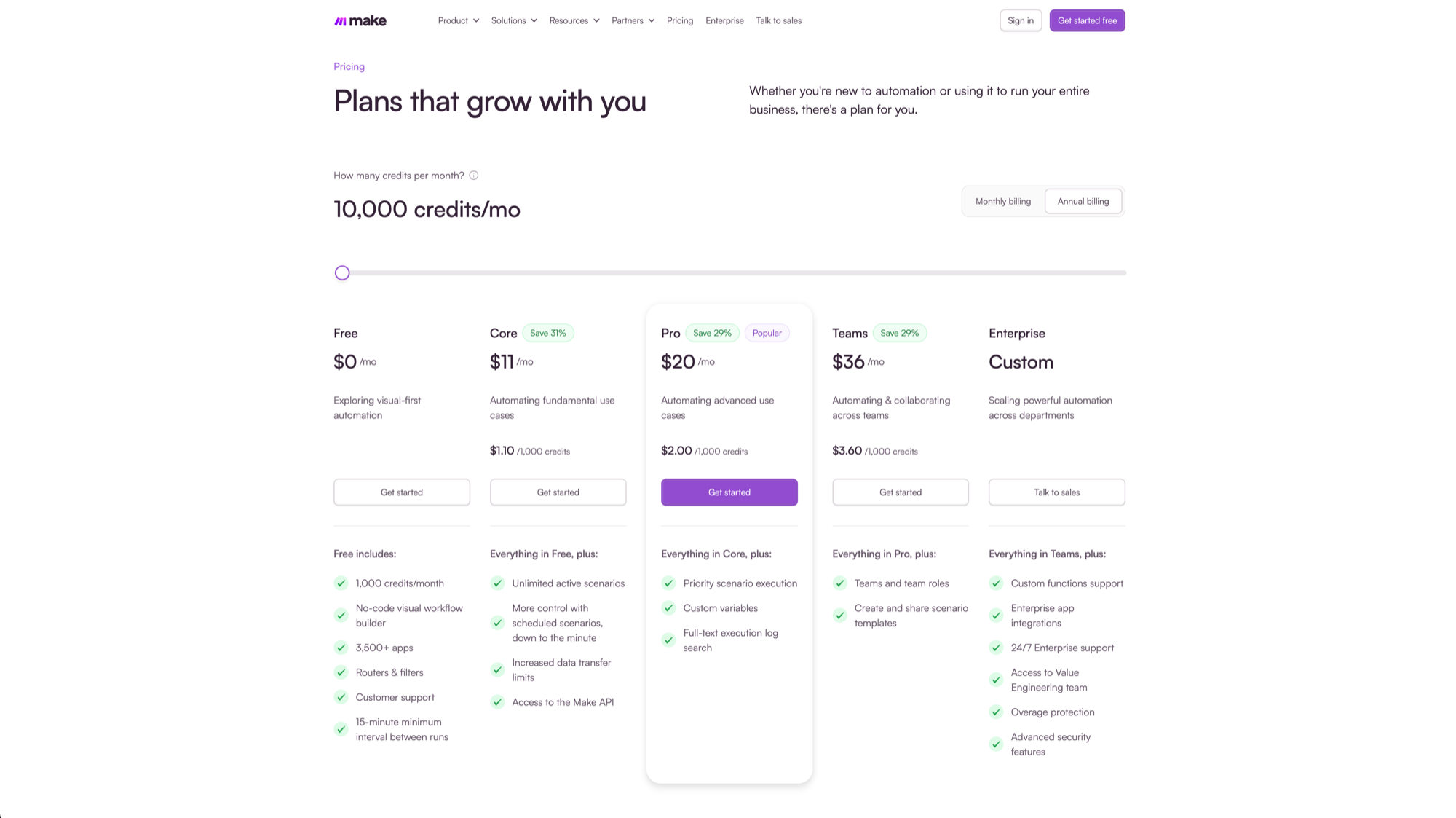
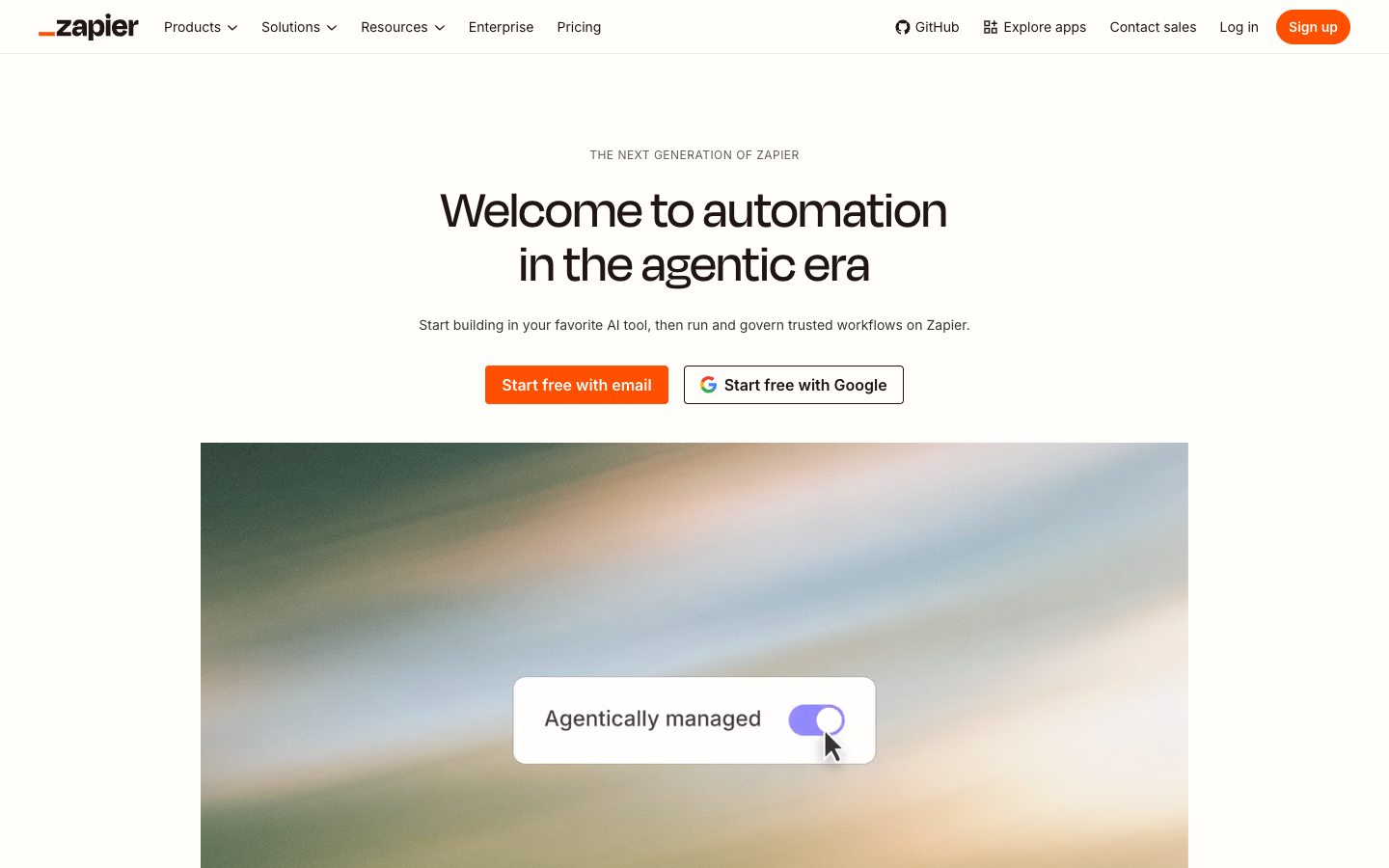
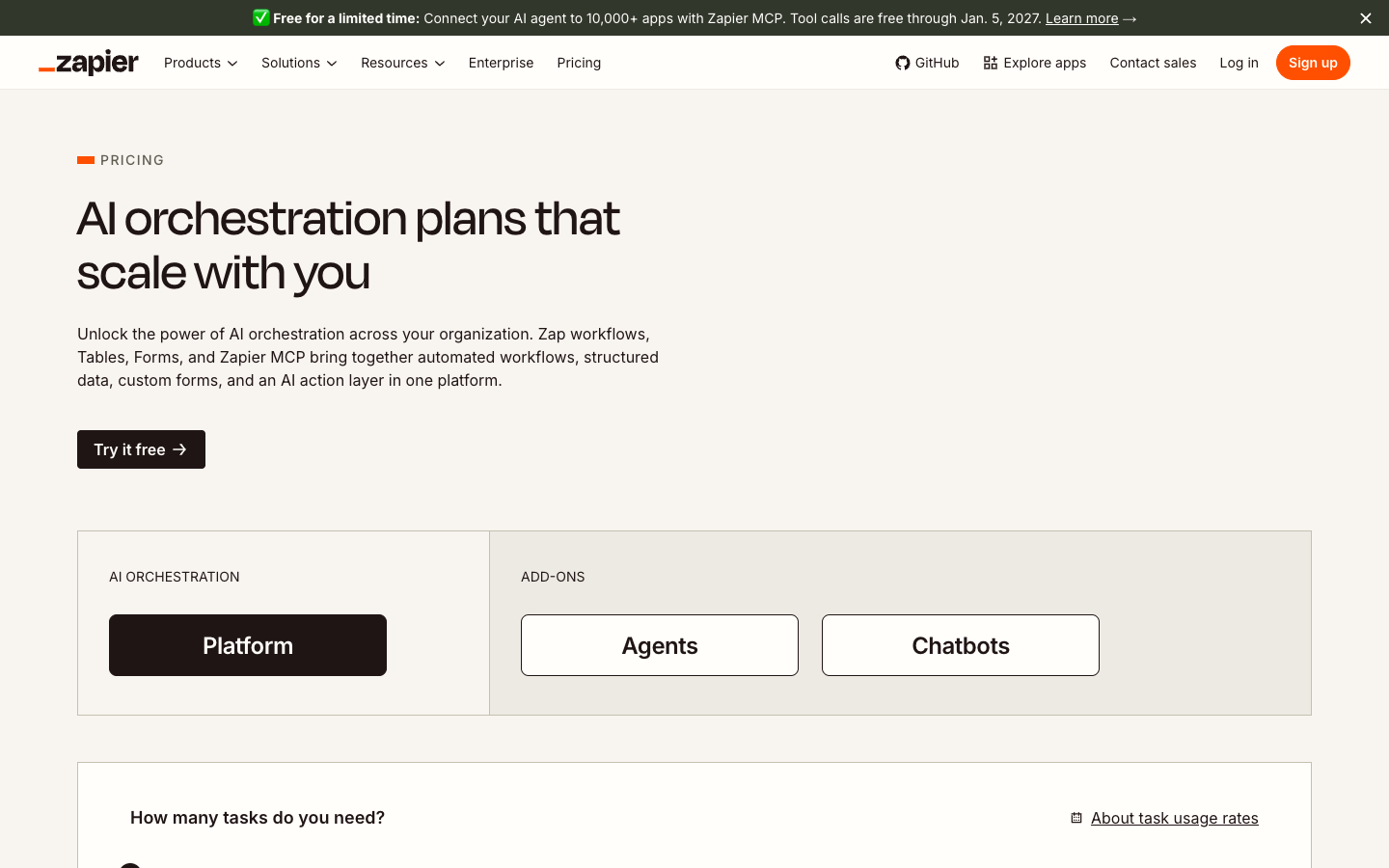
Workflows built by StartAutomate, with names blurred. The Make shot shows a live workflow that files each new paid Shopify order on a Monday.com board for its location. We also run it on WEXTL. See both builders side by side → The Zapier shot shows a shorter Zap, the kind of simple automation we keep on Zapier.
Company and compliance
Company, hosting and compliance
| Feature | Make | Zapier |
|---|---|---|
| Founded | Integromat in 2015 (per Make), renamed Make in 2022[36] | 2011 as a project, company launched 2012[37] |
| Headquarters | Prague, Czech Republic[36] | Remote company. Wikipedia lists San Francisco[9, 37] |
| Company and track record | Part of Celonis, 380+ employees[36] | Private and independent, 800+ people in 38 countries[9, 37] |
| Self-hosting | No. An on-premise agent can reach local apps[19] | No[13] |
| Source code | Closed source[36] | Closed source[9] |
| Compliance | SOC 2 Type II, SOC 3, GDPR. ISO 27001 on Enterprise[19] | SOC 2 Type II, SOC 3, GDPR. HIPAA data not supported[13, 34] |
| SSO | SAML and OIDC SSO on Enterprise[19] | SAML SSO on Team and Enterprise[5, 34] |
Verdict
Which one to pick
Make: who should choose it
Pick Make for a lower bill at every volume, EU data zones and a canvas that shows every branch.
- Cost matters: 10,000 five-step runs a month cost $81 on Make against $433.50 on Zapier, on monthly billing.
- Your data must stay in the EU. Make has EU and US data zones, and Zapier stores data in the US only.
- You want detailed error handlers (Retry, Resume, Rollback, Break, Ignore) and run replay on every plan.
- Your workflows branch a lot and you want to see every route on one canvas.
Zapier: who should choose it
Pick Zapier for the largest app catalog and the editor a non-technical team learns fastest.
- An app you need has a Zapier connector but no Make module (9,000+ apps against 3,500+).
- The people who will edit the workflows have never built one, and a top to bottom list of steps suits them.
- Your volume is low and your Zaps lean on filters, paths and formatter steps, which use no tasks.
- Your triggers poll often. Zapier never charges a task to check for new data, while Make charges 1 credit per check.
FAQ
Frequently asked questions
Short answers on Make and Zapier, each with its source.
Is Make cheaper than Zapier?
Does Make count the trigger as an operation?
Which has more integrations, Make or Zapier?
Keep comparing
More comparisons



Sources
Sources
Every source was read on the date shown. 37 sources in total.
- Pricing. Make. Accessed 28 November 2026. Prices shown in USD. Make may localize prices by region.
- How features use credits. Make Help Center. Accessed 28 November 2026.
- Extra credits. Make Help Center. Accessed 28 November 2026.
- Adjustments to plans and pricing. Make Help Center. Accessed 28 November 2026.
- Plans and pricing. Zapier. Accessed 28 November 2026.
- Task usage rates. Zapier. Accessed 28 November 2026.
- Fix errors and warnings. Make Help Center. Accessed 28 November 2026.
- Using Code by Zapier. Zapier Help Center. Accessed 28 November 2026.
- About Zapier. Zapier. Accessed 28 November 2026.
- Make home page. Make. Accessed 28 November 2026.
- The Make Code app is available. Make Help Center. Accessed 28 November 2026.
- AI providers and data zones. Make Help Center. Accessed 28 November 2026.
- Data privacy. Zapier. Accessed 28 November 2026.
- Parallel capacity. Make Help Center. Accessed 28 November 2026.
- Make reviews. G2. Accessed 28 November 2026.
- Zapier reviews. G2. Accessed 28 November 2026.
- Scenario run replay. Make Help Center. Accessed 28 November 2026.
- App directory. Zapier. Accessed 28 November 2026.
- Security. Make. Accessed 28 November 2026.
- Next Gen Zaps. Zapier Help Center. Accessed 28 November 2026.
- Zap limits. Zapier Help Center. Accessed 28 November 2026.
- Custom error handling. Zapier Help Center. Accessed 28 November 2026.
- Scenario version control. Make Help Center. Accessed 28 November 2026.
- Make AI Agents: the next step in automation. Make Help Center. Accessed 28 November 2026.
- Meet the new Make AI Agents app. Make Help Center. Accessed 28 November 2026.
- Zapier Agents. Zapier. Accessed 28 November 2026.
- Make MCP server. Make Help Center. Accessed 28 November 2026.
- Zapier MCP. Zapier. Accessed 28 November 2026.
- Schedule a scenario. Make Help Center. Accessed 28 November 2026.
- Make reviews. Capterra. Accessed 28 November 2026. Read from a search snippet, the site showed a CAPTCHA.
- Make reviews. Trustpilot. Accessed 28 November 2026.
- Zapier reviews. Capterra. Accessed 28 November 2026. Read from a search snippet, the site showed a CAPTCHA.
- Zapier reviews. Trustpilot. Accessed 28 November 2026.
- Security and compliance. Zapier. Accessed 28 November 2026.
- StartAutomate client work, 2019 to 2026. StartAutomate, first-hand data.
- About Make. Make. Accessed 28 November 2026.
- Zapier. Wikipedia. Accessed 28 November 2026.